

FHA Home Loans in North Carolina and South Carolina

An FHA loan is a mortgage insured by the Federal Housing Administration that lets eligible buyers purchase a primary residence with as little as 3.5% down and a 580 credit score. FHA guidelines are more flexible on credit and debt-to-income than most conventional loans, and you don't have to be a first-time buyer to use one.
FHA loans often help buyers with lower credit scores, higher monthly debts or a past credit event like a bankruptcy or foreclosure.
I'm Paul Mattos, a mortgage broker with Refine Mortgage, licensed in North Carolina and South Carolina. I compare FHA financing from multiple wholesale lenders with conventional and other options, and show you the full payment, mortgage insurance and cash to close before you make an offer.
FHA Loan Requirements in NC and SC at a Glance
Credit score: 580 or higher for 3.5% down; 500 to 579 with 10% down. Many lenders set higher minimums.
Down payment: as low as 3.5%. Gift funds can cover it with proper documentation.
Debt-to-income: often up to the mid-40s with an automated approval, sometimes higher with strong compensating factors.
Mortgage insurance: an upfront premium, usually added to the loan, plus an annual premium paid monthly.
2026 loan limit: $541,287 for a single-family home in Charlotte-area counties in both NC and SC, with higher limits for 2- to 4-unit properties.
Occupancy: must be your primary residence, generally moved into within 60 days of closing.
Property: must meet FHA's health and safety standards at appraisal.
Credit events: generally 2 years after a Chapter 7 bankruptcy and 3 years after a foreclosure.
Down payment assistance: currently offered with FHA loans through wholesale lender programs, usually a second mortgage that may be forgivable or repayable
Is an FHA Loan Right for You?
An FHA loan often fits well when you:
Have a credit score below the mid-600s, or a past credit event
Have higher monthly debts compared with your income
Want to use gift funds, seller credits or down payment assistance to reduce your cash to close
Are buying a primary residence, including a duplex, triplex or fourplex you'll live in
Another loan may fit better when:
Your credit score is around 680 or higher and you want mortgage insurance you can remove later. Compare conventional loans.
You're an eligible veteran or service member. Compare VA loans.
You're buying in an eligible rural or suburban area and want no down payment. Compare USDA loans.
You're buying a second home, an investment property or a home above the FHA loan limit.
I'll compare them side by side for the same home.
FHA Loan Details
-
Qualified buyers may be eligible for an FHA loan with a down payment as low as 3.5% of the purchase price. The actual amount needed depends on the purchase price, so I can calculate your specific down payment once we know the price range you're targeting.
The down payment is not the same as the total cash needed at closing. Buyers may also need funds for closing costs, prepaid homeowners insurance, property taxes, escrow deposits and other transaction expenses.
Depending on the buyer and program requirements, the down payment may come from:
The buyer’s own checking, savings or investment accounts
Eligible gift funds from an acceptable donor
An approved down-payment-assistance program
Other acceptable and properly documented sources
Seller credits may help pay eligible closing costs and prepaid expenses, but they cannot replace the borrower’s required down payment. All gift funds and assistance programs must meet FHA documentation and eligibility requirements.
Putting more than 3.5% down may reduce the loan amount, monthly payment and total interest expense. However, a larger down payment does not automatically eliminate FHA mortgage insurance. I compare the down payment, estimated payment, mortgage insurance and remaining savings to help buyers choose a structure that fits their overall financial goals.
For a more detailed explanation, read What Is the FHA 3.5% Down Loan?.
-
FHA guidelines allow qualified borrowers with a minimum decision credit score of 580 or higher to be considered for maximum financing, which can mean a down payment as low as 3.5%.
FHA guidelines may also permit borrowers with credit scores between 500 and 579 to qualify with at least 10% down. However, many lenders establish their own minimum credit-score requirements, commonly called lender overlays. Having a score that meets FHA’s published minimum does not guarantee loan approval or that every lender will offer the program.
A complete FHA approval considers more than the credit score. The lender will also review factors such as:
Recent payment history
Credit-card balances and monthly debts
Collections, charge-offs or disputed accounts
Previous bankruptcies, foreclosures or other major credit events
Income and employment history
Available funds and financial reserves
Debt-to-income ratio
Automated underwriting findings
A higher credit score may provide access to better pricing or additional lender options, but buyers should not assume they need perfect credit to explore FHA financing. I review the complete credit profile, income, assets and underwriting findings to determine which options may realistically be available and whether steps should be taken before making an offer.
Starting with case numbers assigned on or after January 1, 2027, FHA can also use VantageScore 4.0 and FICO 10T. See FHA's new credit score models.
For a broader explanation of FHA qualification, down payments and credit considerations, read my FHA Loans in Charlotte, NC: A First-Time Buyer Guide.
-
FHA loans generally include two forms of mortgage insurance: an upfront mortgage insurance premium and an annual mortgage insurance premium.
Upfront Mortgage Insurance Premium (UFMIP)
The FHA upfront mortgage insurance premium is generally 1.75% of the base loan amount. Most buyers finance this premium into the mortgage instead of paying it entirely at closing.
Because the premium is usually financed, your starting loan balance is about 1.75% higher than the base loan amount. That lowers the cash you need at closing, but it increases the amount you borrow.
Annual Mortgage Insurance Premium (Annual MIP)
FHA loans also include an annual mortgage insurance premium that is divided into monthly installments and included in the mortgage payment. For many standard 30-year FHA purchase loans with 3.5% down, the annual MIP rate is commonly 0.55%, although the applicable rate can depend on the loan amount, loan term and original loan-to-value ratio.
How long the annual MIP remains depends primarily on the original loan-to-value ratio:
If the original loan-to-value ratio is greater than 90%, annual MIP generally continues for the life of the FHA loan.
If the original loan-to-value ratio is 90% or lower, annual MIP generally continues for 11 years.
FHA mortgage insurance usually does not disappear simply because the home appreciates or the current loan balance falls below 80% of its value. Some homeowners later consider refinancing into a conventional loan, but refinancing only makes sense when the new interest rate, mortgage insurance, closing costs, payment and loan term create a meaningful overall benefit.
Learn more in Can I Refinance an FHA Loan Into Conventional?.
-
An FHA loan generally requires an appraisal completed by an FHA-approved appraiser. The appraiser provides an opinion of the property’s market value and reports whether the home appears to satisfy FHA’s minimum property requirements.
The property must generally be safe, sound and secure. FHA financing is not limited to perfect or newly renovated homes, and ordinary cosmetic issues do not automatically prevent a property from qualifying. However, conditions involving health, safety, structural soundness or the continued marketability of the property may need to be corrected before closing.
Potential FHA appraisal concerns may include:
Active roof leaks or significant roof deterioration
Exposed or unsafe electrical wiring
Missing or nonfunctioning essential utilities
Inadequate heating, plumbing or water systems
Structural damage or significant foundation concerns
Broken windows or other security issues
Peeling or defective paint in homes built before 1978
Certain well, septic, drainage or property-access concerns
The appraiser determines which observed conditions must be reported, and the lender determines what repairs, inspections or additional documentation will be required. Depending on the purchase contract and negotiations, required repairs may be completed by the seller or another permitted party before closing.
An FHA appraisal is not the same as a home inspection. The appraisal is completed for the lender and FHA-insurance requirements; it is not designed to identify every defect in the home. Buyers should strongly consider obtaining an independent home inspection to better understand the property’s condition.
If a home needs substantial repairs that cannot be completed before closing, a standard FHA loan may not work in its current condition. An FHA 203(k) renovation loan or another renovation-financing option may sometimes provide an alternative, depending on the property, proposed repairs and borrower qualifications.
For a detailed explanation of common repair issues and how the process works, read FHA Appraisal Requirements in North Carolina and South Carolina: What Can Prevent a Home From Qualifying?.
-
FHA establishes maximum loan amounts each year. The applicable limit depends on the county where the property is located and whether the property contains one, two, three or four residential units.
For 2026, FHA’s nationwide limits range from:
One-unit property: $541,287 to $1,249,125
Two-unit property: $693,050 to $1,599,375
Three-unit property: $837,700 to $1,933,200
Four-unit property: $1,041,125 to $2,402,625
In the Charlotte area, Mecklenburg, Cabarrus, Union, Iredell, Gaston and Lincoln counties in North Carolina and York, Lancaster and Chester counties in South Carolina all use the 2026 national floor. That means $541,287 for a one-unit home, $693,050 for two units, $837,700 for three units and $1,041,125 for four units. Most other counties in both states also use the floor. A few higher-cost areas are higher, such as Charleston, Berkeley and Dorchester counties in South Carolina at $690,000 for a one-unit home. HUD usually announces the next year's limits near the end of the year.
The FHA loan limit applies to the base loan amount before the financed upfront mortgage insurance premium is added. It is not necessarily the maximum purchase price. A buyer may be able to purchase above the applicable FHA loan limit by making a larger down payment and covering the difference with eligible funds.
The county loan limit also does not determine how much an individual buyer will qualify to borrow. Income, monthly debts, credit, available funds, property expenses and underwriting approval may result in a lower maximum loan amount.
Check the current limit for a specific county using HUD’s official FHA Mortgage Limits Lookup Tool.
-
FHA guidelines allow an interested party, such as the property seller, homebuilder or real estate agent, to contribute up to 6% of the sales price toward eligible borrower costs.
An FHA seller credit may be used for expenses such as:
Lender and loan-origination charges
Appraisal and credit-report fees
Attorney, title and settlement charges
Prepaid homeowners insurance
Prepaid property taxes and escrow deposits
Discount points
Eligible temporary or permanent interest-rate buydowns
Other allowable closing costs
Seller credits generally cannot be used to satisfy the buyer’s required down payment. The buyer must still provide the required down payment from an acceptable source, such as personal funds, eligible gift funds or an approved down-payment-assistance program.
The seller credit also cannot exceed the buyer’s actual allowable costs. Any unused amount is not normally returned to the buyer as cash. That is why the credit should be based on a property-specific estimate rather than automatically requesting the full 6%.
For example, a 6% seller credit on a $300,000 purchase would equal $18,000. If the buyer only has $11,000 in eligible costs, the full $18,000 may not be usable unless the loan is properly restructured within FHA requirements.
Before an offer is submitted, I review the estimated closing costs, prepaid expenses, seller-credit options and potential rate-buydown strategies in a Total Cost Analysis. This helps the buyer and real estate agent request a credit that supports the buyer’s goals without negotiating for money that may go unused.
-
FHA guidelines may allow qualified buyers to use eligible gift funds toward the required down payment, closing costs or other approved expenses. This can help buyers who have enough income to support the mortgage payment but need assistance with the upfront cost of purchasing a home.
An acceptable donor may include:
A family member
A close friend with a clearly documented relationship to the borrower
The borrower’s employer or labor union
A government agency or public entity
An approved charitable or nonprofit organization
Gift funds must be a genuine gift and cannot be an undisclosed loan that the buyer is expected to repay. The lender will generally require a signed gift letter identifying the donor, borrower, relationship, amount of the gift and confirmation that repayment is not required.
The transfer of funds must also be documented. Depending on how the money is transferred, the lender may request bank statements, withdrawal records, deposit records, a copy of the check or evidence of a wire sent directly to the closing agent. Buyers should discuss the gift with their lender before moving money between accounts.
I offer down payment assistance through wholesale lender programs. This assistance is usually a second mortgage that may be forgivable or repayable, depending on the program.
Down-payment assistance is not always free money. Some programs have income limits, purchase-price limits, homebuyer-education requirements, occupancy rules, repayment provisions or restrictions when the home is sold or refinanced. Assistance may also affect the interest rate, monthly payment or overall loan cost.
I compare the assistance program with a standard FHA loan, available seller credits and other financing options. The goal is not simply to minimize the cash needed at closing—it is to understand the payment, repayment obligations and long-term cost before choosing a program.
For more information, read Can You Use Gift Funds on FHA Loans?.
-
FHA loans are designed primarily for borrowers purchasing a home they intend to occupy as their principal residence. They generally cannot be used to purchase a vacation home, second home or property that will be used solely as an investment.
At least one borrower must generally move into the property within 60 days after signing the mortgage documents and intend to continue using it as a primary residence for at least one year. Borrowers must certify their occupancy intentions as part of the loan process.
Eligible FHA properties may include:
Single-family homes
FHA-approved condominiums
Certain manufactured homes
Duplexes, triplexes and four-unit properties
A borrower purchasing a two- to four-unit property may rent the additional units, provided the borrower occupies one unit as a primary residence and the property meets FHA requirements.
FHA generally does not insure more than one principal-residence mortgage for the same borrower at the same time. Limited exceptions may be available for qualifying situations such as employment relocation, an increase in family size or leaving a jointly owned residence. These exceptions require documentation and underwriting approval.
A non-occupying co-borrower may sometimes help another borrower qualify, but at least one borrower must use the property as a primary residence. Loan limits, down-payment requirements and other rules may vary depending on the relationship between the borrowers and the loan structure.
Occupancy must be represented accurately. A buyer who intends to rent the entire property immediately or use it mainly as a second home should discuss other financing options before applying.
-
An FHA loan can be used to purchase a property containing up to four residential units. This can give buyers an opportunity to live in one unit while renting the others to help offset the monthly mortgage payment.
Eligible property types may include:
Duplexes
Triplexes
Four-unit properties
The property must be primarily residential, and the borrower must occupy one of the units as a principal residence. FHA financing cannot be used to purchase a two- to four-unit property that the borrower intends to operate entirely as an investment property.
Using Rental Income to Qualify
Projected rental income from the units the borrower will not occupy may sometimes be included when qualifying. The lender will typically use the FHA appraisal and market-rent analysis to determine the eligible rental income.
Not every dollar of projected rent can be counted. A vacancy and maintenance adjustment is generally applied before the rental income is included in the borrower’s qualifying income.
The property must still meet FHA requirements, including:
FHA loan limits for the property’s county and number of units
Appraisal and property-condition standards
Debt-to-income and credit requirements
Sufficient funds for the down payment and closing costs
Any required cash reserves
Additional underwriting requirements for three- and four-unit properties
Three- and four-unit properties are also subject to an FHA self-sufficiency calculation. The property’s eligible rental income must be sufficient to support the required portion of the total monthly housing expense. Because of this test, a borrower may qualify personally for the payment while the property itself does not meet FHA’s requirements.
Qualified buyers may still be able to purchase an eligible two- to four-unit property with FHA’s minimum down-payment option. However, property condition, rental estimates, reserves, loan limits and the self-sufficiency calculation can affect the final approval.
Buying a small multifamily property can be a useful way to reduce your personal housing expense and begin building a real-estate portfolio. Before making an offer, I can review the estimated rents, projected payment, required reserves and FHA loan limit to determine whether the property appears likely to qualify.
-
FHA and conventional loans can both offer competitive financing, but they have different qualification requirements, mortgage-insurance rules and property standards. The better option depends on the borrower’s credit, down payment, debt-to-income ratio, property and long-term plans.
FHA Loans May Work Better For Buyers Who:
Need more flexibility with credit history or debt-to-income ratios
Plan to make a down payment as low as 3.5%
Are using gift funds or down-payment assistance
Have limited savings remaining after closing
Are purchasing a primary residence containing one to four units
FHA loans require an upfront mortgage-insurance premium and annual mortgage insurance paid through the monthly payment. Depending on the original down payment, annual FHA mortgage insurance may remain for 11 years or for the life of the loan.
Conventional Loans May Work Better For Buyers Who:
Have stronger credit and a stable financial profile
Qualify for a down payment as low as 3%
Want mortgage insurance that may eventually be canceled
Are purchasing a primary residence, second home or investment property
Need a loan amount above the applicable FHA loan limit
Are purchasing a property that may not satisfy FHA condition requirements
Conventional private mortgage insurance can often be removed after the borrower builds sufficient equity and meets the applicable requirements. Conventional loans may also have fewer property-condition requirements than FHA financing.
Which Loan Has the Lower Payment?
FHA does not automatically have a lower payment, and conventional financing is not automatically less expensive. The result depends on factors including:
Credit score
Down payment
Interest rate
Mortgage-insurance cost
Loan amount
Property taxes
Homeowners insurance
Seller credits
How long the buyer expects to keep the loan
For some buyers, FHA provides the strongest approval and lowest initial payment. For others, conventional financing offers lower mortgage-insurance costs and better long-term flexibility.
I compare both options whenever appropriate instead of assuming one program is automatically better. Buyers can review additional conventional requirements on my Conventional Home Loans in North Carolina and South Carolina page.
-
A previous bankruptcy, foreclosure, short sale or period of financial hardship does not automatically prevent someone from qualifying for an FHA loan. FHA financing can provide a path back to homeownership, but the required waiting period and documentation depend on the type of credit event and what has happened since it occurred.
Chapter 7 Bankruptcy
A borrower is generally required to wait at least two years after the Chapter 7 bankruptcy discharge date.
An exception may sometimes be considered when the bankruptcy resulted from documented circumstances beyond the borrower’s control and the borrower has since demonstrated an ability to manage credit responsibly. These situations require additional documentation and underwriting review.
Chapter 13 Bankruptcy
A borrower currently making payments through a Chapter 13 repayment plan may sometimes qualify after completing at least 12 months of satisfactory, on-time payments.
The borrower will generally need:
Permission from the bankruptcy court to obtain the mortgage
Documentation of the repayment history
Stable qualifying income
Satisfactory credit since filing
Manual underwriting in certain situations
The borrower does not always have to wait until the Chapter 13 bankruptcy has been completely discharged, but lender requirements and the circumstances of the bankruptcy matter.
Foreclosure or Deed in Lieu of Foreclosure
FHA generally requires a three-year waiting period following a foreclosure or deed in lieu of foreclosure. The starting date is normally based on when the borrower’s ownership interest in the property was transferred, rather than the date the borrower first missed a payment.
Documented extenuating circumstances may sometimes allow an exception, but ordinary financial difficulty, declining property values or an inability to sell the home may not be sufficient by themselves.
Short Sales
A previous short sale may also create a waiting period. Eligibility depends on factors such as:
When the property was sold
Whether the mortgage was delinquent
The borrower’s payment history before the sale
The reason for the short sale
Whether the borrower was taking advantage of declining market conditions
Because short-sale situations can be evaluated differently, the closing disclosure, settlement statement and previous mortgage history should be reviewed before establishing a homebuying timeline.
Late Payments, Collections and Other Credit Problems
Older late payments, collections or charge-offs do not always have to be paid before an FHA loan can close. However, the lender must evaluate the borrower’s complete credit history and determine whether the problems were isolated or represent an ongoing pattern.
Recent housing-payment delinquencies are especially important. Underwriting may consider:
Mortgage or rental-payment history
Recent credit-card and installment-loan payments
Outstanding collections or judgments
Payment plans
The cause of the financial hardship
Whether the borrower has reestablished credit
Current income, savings and overall financial stability
Waiting periods are only one part of the approval. Before applying, I review the credit event, applicable dates and supporting documents so we can determine the likely FHA timeline and identify any issues that should be addressed before the borrower begins making offers.
-
Yes, it may be possible to purchase a new home with an FHA loan before selling your current residence. The correct strategy depends on your existing mortgage, available equity, qualifying income and whether you plan to sell or rent the current home.
If Your Current Home Is Under Contract
When the sale of your current home will close before the new purchase, the existing mortgage is generally paid off first and may not affect the new FHA loan.
If the sale will close after the new home purchase, the current mortgage payment may still be excluded from the debt-to-income calculation when there is a fully executed sales contract and the required financing contingencies have been satisfied. The exact documentation and timing must be reviewed by underwriting.
If You Plan to Keep and Rent Your Current Home
FHA generally requires at least 25% equity in the current home before its projected rent can be used to qualify, unless you are relocating for work. Equity is usually confirmed with an appraisal.
You may be able to convert the current residence into a rental property, but FHA has specific requirements for using the projected rent to qualify.
Depending on the situation, the lender may need:
A signed lease
Evidence of the security deposit or first month’s rent
An appraisal with a market-rent analysis
Documentation of sufficient equity
Evidence of a qualifying employment relocation
Cash reserves for both properties
Not all projected rent can necessarily be counted. A vacancy and maintenance adjustment is generally applied before eligible rental income is used for qualification.
If the FHA requirements for using rental income are not met, the borrower may have to qualify with both the current housing payment and the payment on the new home.
If Your Current Mortgage Is an FHA Loan
FHA generally does not allow a borrower to have more than one FHA-insured principal-residence mortgage at the same time. Limited exceptions may be available for situations such as:
Employment relocation
A documented increase in family size
Vacating a jointly owned residence
Certain non-occupying co-borrower situations
If an exception does not apply, the current FHA loan may need to be paid off before the new FHA loan can close. Selling the property, paying off the mortgage or using a different loan program for the new purchase may provide another solution.
Plan Before Making an Offer
Buying before selling requires careful planning because the borrower may temporarily need funds for:
The new down payment
Closing costs
Two mortgage payments
Property taxes and insurance
Moving expenses
Required reserves
Before an offer goes out, I review the current mortgage, estimated sale proceeds, available cash, debt-to-income ratio and timing of both transactions. I can then compare selling first, buying first, converting the current home into a rental or using conventional financing to determine which structure provides the safest path forward.
FHA Loans in the Charlotte Area
A few local details can change your FHA loan numbers:
Loan limits: in 2026, every Charlotte-area county in both states (Mecklenburg, Cabarrus, Union, Iredell, Gaston, Lincoln, York, Lancaster and Chester) uses the $541,287 one-unit limit, well above the region's recent median sale price.
Condos: many condo buildings in Uptown and South End aren't on HUD's FHA-approved list. Check the project before you make an offer, or ask me about single-unit approval.
New construction: builder incentives on FHA loans are generally limited to 6% of the price, and the builder must provide FHA's required paperwork. The first tax bill on a new home may cover only the land.
South Carolina property taxes: a primary home in South Carolina can be taxed at the 4% owner-occupied rate instead of 6%, but you must apply with the county.
For more, see my FHA loans in Charlotte first-time buyer guide.
A Real Homebuying Experience
“I’ve always wanted to buy my own house and Paul helped me do just that. He was resourceful, responded quick, and meets you where you’re at. 10/10 would recommend over and over again! I look forward to seeing what we accomplish in the future!”

How My FHA Loan Process Works
Talk through your goals. We discuss where you want to buy, your timeline, the monthly payment you're comfortable with and how much cash you want to keep after closing.
Application and documents. You complete a secure application and upload documents such as pay stubs, W-2s or tax returns, bank statements and any gift or bankruptcy paperwork. I review them upfront instead of issuing a letter based only on what's typed into an application.
Credit, income and underwriting review. I review your credit, income, debts and assets and run your file through automated underwriting, so questions get answered before you start making offers.
Compare your options. I compare FHA with conventional and other programs, including down payment, mortgage insurance, rate and point options, gift funds and down payment assistance, from multiple wholesale lenders.
Total Cost Analysis before your offer. When you find a home, I prepare a Total Cost Analysis using that property's taxes, insurance and HOA dues, and check FHA-specific issues like the loan limit, condo approval and visible repairs. I can also talk with your agent about seller credits and contract timing.
Processing, appraisal and closing. Once you're under contract, my team orders the FHA appraisal and handles title, insurance and underwriting conditions, keeping you, your agent and the closing attorney updated through closing. Closing dates depend on appraisal, required repairs, title, underwriting and the purchase contract.
FHA Loan Frequently Asked Questions
-
FHA allows a 580 score for 3.5% down and 500–579 with 10% down. Many lenders set higher minimums, so results vary by lender.
-
No. FHA loans are available to qualified first-time and repeat homebuyers. The property must generally be purchased as the borrower’s primary residence.
-
Qualified borrowers with a credit score of at least 580 may be eligible for a down payment as low as 3.5%. Borrowers with scores between 500 and 579 may require at least 10% down, although individual lenders may establish higher minimum credit requirements.
-
FHA loans generally do not have a maximum household-income limit. Approval is based on qualifying income, credit, debts, assets and the borrower’s ability to repay the loan. Certain down-payment-assistance programs used with FHA financing may have separate income limits.
-
Yes. FHA allows acceptable gift funds from eligible donors to help cover the down payment and closing costs. The lender must document the donor, source of the funds and transfer of the money. Learn more in my guide to using gift funds with an FHA loan.
-
Yes. FHA generally permits interested parties, including the seller, to contribute up to 6% of the sales price toward eligible closing costs, prepaid expenses and discount points. Contributions cannot be used for the borrower’s required minimum down payment or returned to the buyer as cash.
-
Yes. FHA loans generally include an upfront mortgage-insurance premium and an annual mortgage-insurance premium collected through the monthly payment. How long the annual premium remains depends partly on the loan term and original loan-to-value ratio.
-
An FHA appraisal is generally required for a home purchase. The appraiser evaluates the property’s market value and looks for conditions affecting health, safety or structural soundness. Read more about FHA appraisal requirements in North Carolina and South Carolina.
-
A standard FHA loan may not work when a property requires significant repairs before it can meet FHA requirements. An FHA 203(k) renovation loan may provide another option by combining eligible purchase and renovation costs into one mortgage.
-
Yes. FHA financing may be used to purchase an eligible property containing one to four residential units, provided the borrower occupies one unit as a primary residence. Eligible rental income from the other units may sometimes help the borrower qualify.
-
FHA loans are generally intended for primary residences. They normally cannot be used to purchase a vacation home, second home or property that will be operated entirely as an investment.
-
FHA generally limits a borrower to one FHA-insured principal-residence mortgage at a time. Exceptions may be available for documented situations such as employment relocation, an increase in family size or vacating a jointly owned residence.
-
Possibly. FHA has waiting periods and documentation requirements that vary according to the credit event. The lender will also review whether the borrower has reestablished credit, maintained satisfactory payments and resolved the circumstances that caused the earlier financial hardship.
-
FHA rates can be competitive, but the interest rate alone does not determine which loan is less expensive. Buyers should compare the rate, mortgage insurance, closing costs, down payment and total monthly payment for both FHA and conventional options.
-
Yes. Depending on future equity, credit, rates and financial goals, an FHA loan may later be refinanced into another FHA loan or a conventional mortgage. Refinancing is not guaranteed to reduce the payment or overall borrowing cost, so the complete loan structure should be reviewed first.
-
For 2026, it's $541,287 for a one-unit home in the Charlotte-area counties of NC and SC, with higher limits for two- to four-unit properties.
Learn more about qualifying in my guide: How Do I Qualify for a Home Loan?
Related FHA Loan Articles
Learn more about FHA down payments, property requirements, mortgage insurance and refinancing with these detailed guides for buyers and homeowners in North Carolina and South Carolina.
FHA Loans in Charlotte, NC: A First-Time Buyer Guide
How FHA works in the Charlotte area, including county loan limits, condo approval, new construction and local property taxes.FHA Appraisal Requirements in North Carolina and South Carolina
Review common health, safety and property-condition issues that can prevent a home from qualifying.Can You Use Gift Funds on FHA Loans?
See who may provide a gift and how the funds must be documented for underwriting.Can I Buy a Duplex With an FHA Loan?
Learn how buyers may purchase a multifamily property, occupy one unit and potentially use eligible rental income to qualify.FHA vs. Conventional Loan: Which Is Better?
Compare down payments, credit flexibility, mortgage insurance, property requirements and long-term costs.Can I Refinance an FHA Loan Into a Conventional Loan?
Understand when refinancing from FHA to conventional financing may reduce mortgage insurance or improve the loan structure.What Is an FHA Streamline Refinance?
Learn how eligible homeowners may refinance an existing FHA loan with a simplified documentation process.FHA Credit Score Change: VantageScore 4.0 and FICO 10T
What FHA's new credit score models mean for buyers starting in 2027.
Can I Buy a House With 5% Down? NC & SC Guide
How FHA, conventional, VA and USDA low down payment options compare.
A Real Client Review
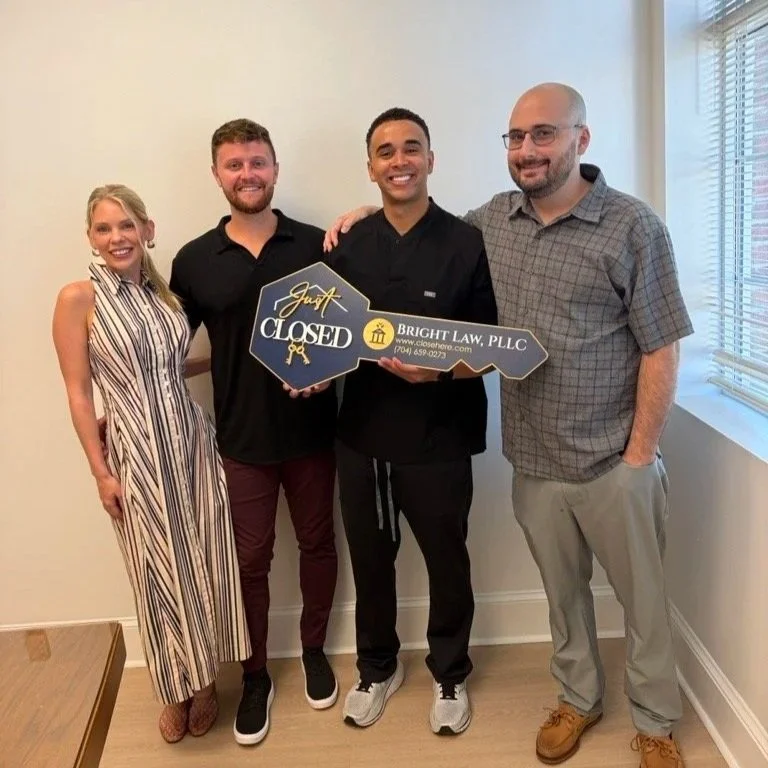
“Paul was great throughout the entire process. Highly recommend to anyone looking to buy a home”
Ready to Compare Your FHA Loan Options?
The right FHA loan involves more than the interest rate. Your down payment, mortgage insurance, closing costs, seller credits, monthly payment and remaining savings should all work together. Schedule a consultation and I'll compare FHA with your other options and prepare a Total Cost Analysis before you make an offer.
Official HUD and CFPB Sources
HUD FHA Single Family Housing Policy Handbook 4000.1 — FHA’s official source for borrower eligibility, underwriting, property and mortgage-insurance requirements.
HUD FHA Mortgage Limits — Look up current FHA loan limits by state, county or metropolitan area.
HUD FHA and Housing Resources — Official FHA information and assistance for homebuyers, homeowners and mortgage professionals.
Consumer Financial Protection Bureau: FHA Loans — Consumer guidance explaining how FHA loans work and how they compare with other mortgage options.
Consumer Financial Protection Bureau: Mortgage Insurance — Information about upfront and monthly FHA mortgage-insurance costs.
Reviewed by Paul Mattos
Paul Mattos
Mortgage Broker | Refine Mortgage
Carolina Home Financing
NMLS# 2339069 | Licensed in NC and SC
Call or text: 980-221-4959
Email: paulm@refinemortgage.net
Last reviewed: October 2026
Refine Mortgage Inc. | NMLS# 2417960 | Equal Housing Lender. This page provides general educational information and is not a commitment to lend, a rate quote or an offer of specific credit terms. FHA loan limits, mortgage insurance and guidelines can change, and lenders may set stricter requirements. Qualification depends on the borrower, property, loan structure and underwriting approval. Not all applicants will qualify. Refine Mortgage is not affiliated with or endorsed by HUD or the Federal Housing Administration.