

Specialized Home Loans in North Carolina and South Carolina
Bank Statement Loans, DSCR Loans, HELOCs and Construction Financing
Your financing needs may involve more than buying a home with a standard mortgage. You might be self-employed, purchasing a rental property, accessing equity in a home you already own or planning to build.
Specialized financing options may include bank statement loans, DSCR investment-property loans, home equity lines of credit, one-time-close construction loans, renovation financing and jumbo mortgages. Each serves a different purpose and has its own qualification requirements.
I’m Paul Mattos with Refine Mortgage, a mortgage broker licensed in North Carolina and South Carolina. I help buyers, homeowners and investors compare available mortgage options based on their income, property, budget and long-term plans.
Whether you are purchasing in Charlotte, building near Lake Norman, investing in Rock Hill or reviewing the equity in your Fort Mill home, the starting point is understanding what you want the financing to accomplish.

Bank Statement Loans for Self-Employed Borrowers
A bank statement loan may allow an eligible self-employed borrower to qualify using documented deposits into personal or business accounts instead of relying primarily on tax returns to calculate income.
These programs may be worth reviewing for business owners, independent contractors, consultants and other self-employed borrowers whose qualifying income under traditional mortgage guidelines does not support the loan they need.
Being self-employed does not automatically mean you need a bank statement loan. I also review whether your documented income supports conventional or other available financing.
-
Many programs review 12 or 24 months of statements, although documentation requirements vary.
The lender evaluates which deposits represent eligible income, whether deposits are consistent and how much of the business revenue is available after operating expenses. Transfers between your own accounts, borrowed funds and unsupported deposits generally cannot simply be counted as new income.
When business statements are used, the lender may apply an expense factor and account for your ownership percentage. Gross business deposits are not automatically your personal qualifying income.
-
Depending on the program, the review may include:
Credit history and existing monthly debts
Length of self-employment and business ownership
Down payment and closing funds
Cash reserves remaining after closing
Property type and intended occupancy
Supporting business documents and explanations for unusual deposits
Bank statement financing still requires underwriting. Rates, fees, down payment and reserve requirements may differ from traditional mortgage options.
Read the complete guide: How Bank Statement Loans Work.
DSCR Loans for Rental Property Investors
A debt service coverage ratio loan, commonly called a DSCR loan, evaluates an investment property’s qualifying rental income relative to its required housing expense.
These programs are generally designed for business-purpose rental-property financing. They are not intended for a home you plan to occupy as your primary residence.
DSCR financing may be worth comparing with a conventional investment loan when an investor wants the rental property’s income to play the central role in qualification.
-
For many residential DSCR programs, the calculation compares qualifying monthly rent with the property’s monthly principal, interest, taxes, insurance and association dues. The exact calculation depends on the loan structure and lender.
A ratio of 1.0 means the qualifying rental income equals the housing expense used in that calculation. It does not establish that the property will produce a profit.
Vacancy, maintenance, repairs, management costs and other expenses can affect your actual cash flow. Lenders also differ in the minimum ratio they accept and how they evaluate leases, market rent and short-term rental income.
-
The lender may review:
Credit and mortgage-payment history
Down payment or equity
Property value, condition and rental documentation
Cash reserves
Investor experience
Ownership structure and any personal-guarantee requirements
Some DSCR loans include prepayment penalties where permitted. Those terms matter if you expect to sell or refinance soon.
Read more: What Is a DSCR Loan?.
HELOCs: Accessing Equity Without Replacing Your First Mortgage
A home equity line of credit, or HELOC, allows an eligible homeowner to borrow against available home equity up to an approved limit.
When a HELOC is placed behind an existing first mortgage, that first mortgage generally remains in place. The HELOC creates a separate borrowing obligation secured by the property.
This may be worth considering when you need funds for home improvements or another planned expense and want to compare options that preserve your existing first mortgage.
-
A HELOC typically has a draw period during which you can access available funds under the agreement. After that period, further borrowing generally ends and the remaining balance must be repaid according to the loan terms.
Many HELOCs have variable interest rates. Payments can change as rates move, as you borrow more or when the repayment period begins. Some programs offer fixed-rate features, but those features vary.
Because your home secures the debt, failure to repay can result in foreclosure.
-
Your available credit depends on more than the estimated value of your home.
The lender may consider:
Property value and existing mortgage balances
The proposed credit limit and other liens
Credit, income and monthly debts
Occupancy and property type
The lender’s combined loan-to-value limit
Combined loan-to-value compares the debt secured by the property with its value. You generally cannot assume that all of your equity is available to borrow.
-
A HELOC provides a revolving credit line. A home equity loan generally provides a lump sum with its own repayment schedule. A cash-out refinance replaces the existing first mortgage with a new mortgage.
I compare the existing mortgage, additional borrowing amount, fees, payment changes and expected payoff period. Keeping an existing mortgage does not automatically make a HELOC the least expensive choice.
Investment-property HELOC options may also be available through certain lenders, with different eligibility and documentation requirements.
Read the comparison: HELOC vs. Cash-Out Refinance.
One-Time-Close Construction Loans in NC and SC
If your goal is to build a home, it helps to review the land and construction financing together before committing to a lot.
A one-time-close construction loan, sometimes called an OTC or single-close construction-to-permanent loan, combines the construction phase and permanent mortgage into one financing transaction.
Depending on the program, the loan may include purchasing the lot and financing eligible construction costs. If you already own the land, the lender will review its value, ownership and any existing liens.
-
The lender evaluates both your qualifications and the proposed project.
That review may include:
Builder approval
Construction contract, plans and specifications
Project budget and contingency funds
Land details and site preparation
Appraisal based on the proposed completed home
Required permits, inspections and completion documents
Construction funds are generally released in stages, called draws, as work progresses. After completion and satisfaction of the loan’s requirements, the financing transitions to the permanent mortgage under the loan documents.
-
We should review:
Required funds at closing and during construction
Payments during the construction phase
Permanent mortgage terms
Rate-lock provisions and any available modification options
Completion deadlines and possible extension costs
How budget changes and cost overruns are handled
Any updated documentation or requalification requirements
A single closing does not eliminate construction conditions or guarantee that your rate will decrease after the home is completed. The actual program documents control those terms.
-
A standalone land loan may be an option if you are purchasing a parcel before you are ready to build.
If construction is your next step, I recommend reviewing OTC eligibility first. That allows us to evaluate the lot, builder, construction budget and permanent financing as one plan.
Buying the land first does not guarantee approval for a future construction loan.
-
If a builder is financing construction and selling you the completed home, you may be able to use a standard purchase mortgage instead of obtaining your own construction loan.
For that type of purchase, read Buying a New Construction Home in Charlotte, which covers builder financing comparisons, incentives and planning considerations.
Renovation Loans for Homes That Need Work
Renovation financing may allow eligible home improvements to be included with a purchase mortgage or refinance.
This can be useful when you are considering a property that needs repairs or want to evaluate a larger renovation to a home you already own.
FHA 203(k) and certain conventional renovation programs are examples of financing structures that may be available, depending on the lender, borrower, property and project.
-
A renovation review may include:
A defined scope of work
Contractor estimates and approval
Eligible repair types
Appraisal requirements
Funds for unexpected expenses
Draw procedures, inspections and completion deadlines
Do not assume that every improvement qualifies or that you can complete all the work yourself. Contractor and self-help rules differ by program.
For an existing homeowner, a HELOC or home equity loan may also be worth comparing, depending on the project and available equity.
Read more about property-condition issues in FHA Appraisal Requirements in North Carolina and South Carolina.
Jumbo Loans for Larger Mortgage Amounts
A jumbo mortgage exceeds the applicable conforming loan limit. That limit depends on the property’s location, number of units and the year.
The classification is based on the mortgage amount. A higher purchase price does not automatically require jumbo financing if the down payment brings the loan within the applicable conforming limit.
-
The lender may evaluate:
Credit and repayment history
Down payment or existing equity
Income documentation and monthly debts
Cash reserves
Property type and occupancy
Appraisal requirements
Jumbo financing can overlap with other specialized programs. For example, some lenders offer larger loan amounts using alternative income documentation.
The comparison should include the payment, closing costs, available savings after closing and the requirements of the specific lender.
Read the full guide: Conforming vs. Jumbo Loans: What Carolina Buyers Need to Know.
How Do You Choose the Right Specialized Loan?
Start with what you need the loan to do.
Document self-employment income: Compare traditional income qualification with available bank statement programs.
Finance a rental property: Compare conventional investment financing with DSCR options.
Access existing equity: Compare a HELOC, home equity loan and cash-out refinance.
Build a home: Review OTC construction financing before committing to a lot or construction contract.
Buy a home needing repairs: Review the property and proposed work for renovation financing.
Borrow above conforming limits: Compare eligible jumbo structures and reserve requirements.
Some buyers may also qualify for down-payment assistance. Assistance has separate eligibility, funding, repayment and forgiveness rules; it should be evaluated with the underlying mortgage.
For a broader starting point, compare home loan programs in North Carolina and South Carolina.
How My Specialized Loan Review Works
1. Discuss Your Goal and Property
We start with the purpose of the financing, your budget, available funds and timeline. For investors, that includes the rental strategy. For construction or renovation, it includes the proposed project.
2. Review the Relevant Documentation
Depending on the loan, I may request tax returns, bank statements, mortgage statements, leases, asset records, builder information or project estimates.
With your authorization, we also review credit and the other information needed to evaluate potential options.
3. Compare Available Structures
We review the estimated payment, closing costs, cash required, reserves and any terms that could affect your plans.
That may include a variable HELOC rate, a DSCR prepayment provision or construction completion requirements.
4. Evaluate the Specific Property
The property can change the available financing. Rental income, taxes, insurance, association dues, condition and construction details may all affect the review.
A preliminary discussion or preapproval is not final loan approval.
5. Work Through Underwriting and Closing
I review income, assets and loan options early so we can identify questions before an offer. Closing dates depend on appraisal, title, underwriting, documentation and the purchase contract. We will discuss a realistic timeline for your specific file.
Early review can identify issues, but underwriting, appraisal, title or documentation may still change the outcome.
A Past Client’s Experience
Understanding your financing matters throughout the mortgage process. My approach is to explain the options, answer questions and keep you informed about the next steps.
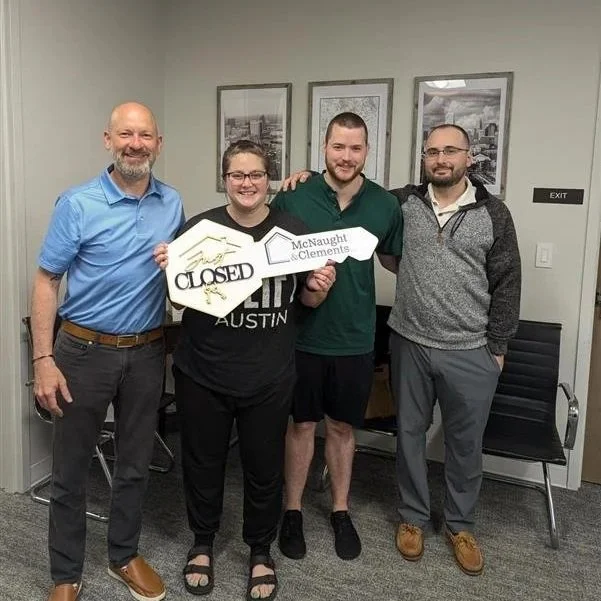
“He explained everything in detail, always ensured we understood the current information as well as next steps”
Frequently Asked Questions About Specialized Home Loans
-
No. “Specialized home loans” is a broad description of financing for particular needs.
Bank statement mortgages are commonly non-QM loans. Construction, renovation and jumbo loans may follow different rules. Business-purpose DSCR loans and HELOCs also have different structures and requirements.
-
No. Bank statement loans use an alternative method of documenting and calculating eligible income. The lender still reviews the statements and other required information.
Not every deposit counts, and business revenue may need to be adjusted for expenses and ownership.
-
The business-purpose DSCR rental programs described here are intended for investment properties, not your primary residence. Tell the lender how you actually plan to use the property so the financing can be evaluated correctly.
-
Some lenders permit eligible LLC ownership. Entity documents, ownership details and a personal guarantee may still be required. LLC ownership does not automatically eliminate personal responsibility for the loan.
-
A HELOC placed behind your existing first mortgage generally allows that mortgage to remain in place. You take on an additional obligation, and the combined payments and total cost should be reviewed.
-
Possibly, when both lenders’ requirements permit it. The new mortgage lender must review the source of funds and any required payment on the borrowed money.
Discuss your purchase plans and any intended occupancy change before opening or drawing on the line.
-
Not necessarily. Some construction-to-permanent programs can include the lot purchase with eligible construction costs.
The land, builder, project and borrower must meet the selected program’s requirements.
-
Possibly. The lender will review the land’s value, acquisition history, existing debt and the overall transaction. Those details determine how the land is treated and how much additional cash may be required.
-
No. Updated documents or requalification may be required under the applicable guidelines or if the loan or property circumstances change. We will review the specific program’s conditions before you commit.
-
A previous denial does not always mean every program has been evaluated. I can review the written denial and documentation to see whether another eligible path exists; approval is subject to underwriting.
Let’s Compare Financing Around Your Plans
If you are self-employed, buying a rental property, accessing home equity or preparing to build, a useful first step is reviewing the numbers and documentation before committing to a loan structure.
I help buyers and homeowners throughout North Carolina and South Carolina understand available options, estimated costs and the conditions that may affect their financing.
Paul Mattos
Mortgage Broker | Refine Mortgage
NMLS# 2339069 | Licensed in North Carolina and South Carolina
980-221-4959 | PaulM@RefineMortgage.net
Refine Mortgage Inc. | NMLS# 2417960
This page provides general educational information and is not a commitment to lend. Program availability, eligibility, rates, fees and terms vary by borrower, property, lender and loan purpose. Financing is subject to applicable credit, income or cash-flow review, valuation, title and underwriting requirements. Not all applicants will qualify.